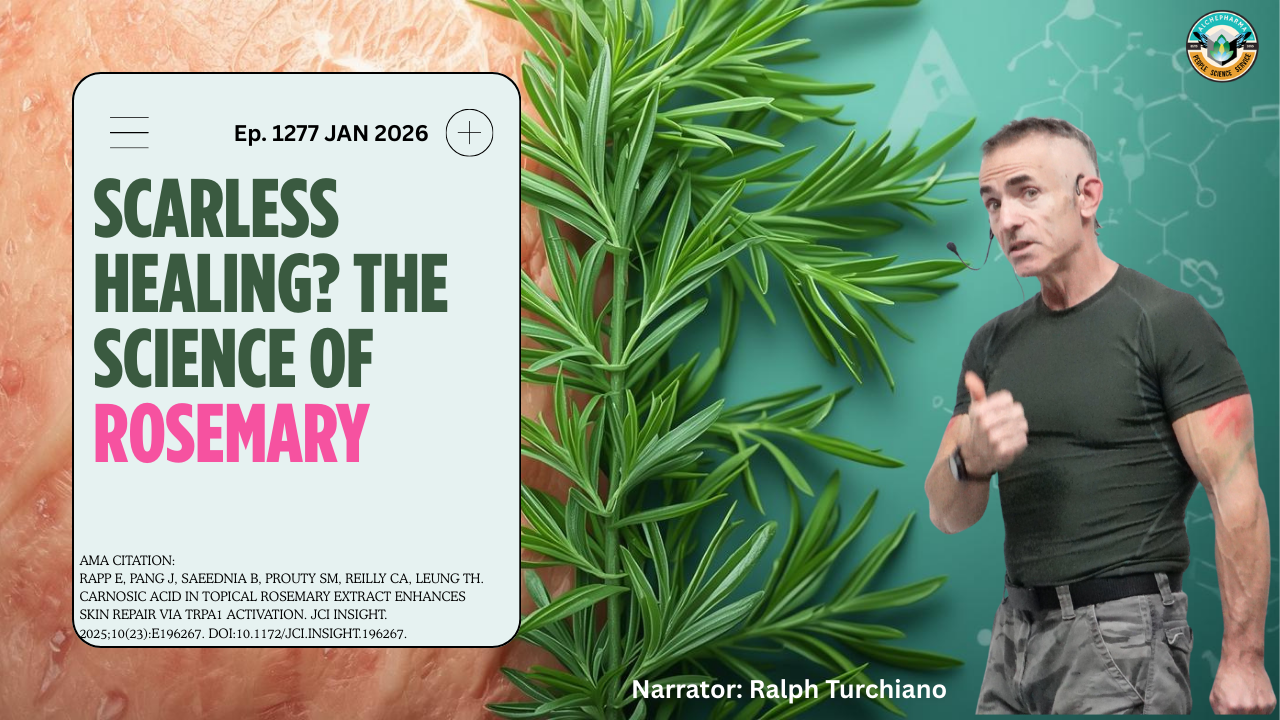
A 2025 study published in JCI Insight has identified a specific molecular pathway through which rosemary extract promotes regenerative, scarless wound healing. While many human skin wounds typically heal with fibrotic scars, researchers found that carnosic acid—the most abundant bioactive compound in rosemary leaves (~12.2% abundance)—activates the TRPA1 nociceptor on cutaneous sensory neurons. In adult mouse models, daily application of carnosic acid cream resulted in ~90% wound closure over four weeks, compared to just ~35% in vehicle control groups. Histological analysis confirmed that this was true regeneration, including the return of hair follicles, sebaceous glands, and subcutaneous fat with significantly reduced fibrosis. Mechanistically, rosemary triggers a cascade where activated sensory neurons stimulate dermal cells to produce IL-23, activating specific T cells that drive tissue repair. Interestingly, the study noted that while other plants like thyme and oregano also activate TRPA1, rosemary extract provides a potent, less caustic alternative to traditional chemical agonists.
Disclaimers
- This information is for educational purposes only and should not be interpreted as medical advice.
- The study discussed was conducted on animal models (adult mice). Further human clinical trials are necessary to confirm these regenerative findings in human skin.
- Always consult with a qualified healthcare professional before applying new extracts or treatments to open wounds, especially if you have sensitive skin or underlying medical conditions.
AMA Citation
Rapp E, Pang J, Saeednia B, Prouty SM, Reilly CA, Leung TH. Carnosic acid in topical rosemary extract enhances skin repair via TRPA1 activation. JCI Insight. 2025;10(23):e196267. doi:10.1172/jci.insight.196267.
#RosemaryExtract #SkinRepair #DermatologyScience #CarnosicAcid #ScarlessHealing #WoundRegeneration #Biohacking #SkinCareScience #TRPA1 #NaturalRemedies #MedicalResearch #TissueEngineering #HealthySkin #PlantMedicine #ScientificDiscovery
rosemary extract wound healing 2025, carnosic acid skin repair, TRPA1 nociceptor regeneration, scarless healing botanical, Rosmarinus officinalis carnosic acid, topical rosemary for scars, skin tissue regeneration, JCI Insight rosemary study, carnosic acid dermatology, IL-23 skin healing, sensory neuron TRPA1, natural scar treatment, regenerative dermatology, carnosic acid extraction, reduce skin fibrosis, hair follicle regeneration rosemary, sebaceous gland restoration, TRPA1 agonist, local wound healing rosemary, gamma delta T cells skin, IL-17 IL-22 repair, ethanol rosemary extract, scar prevention research, carnosic acid clinical potential, skin repair mechanism.