
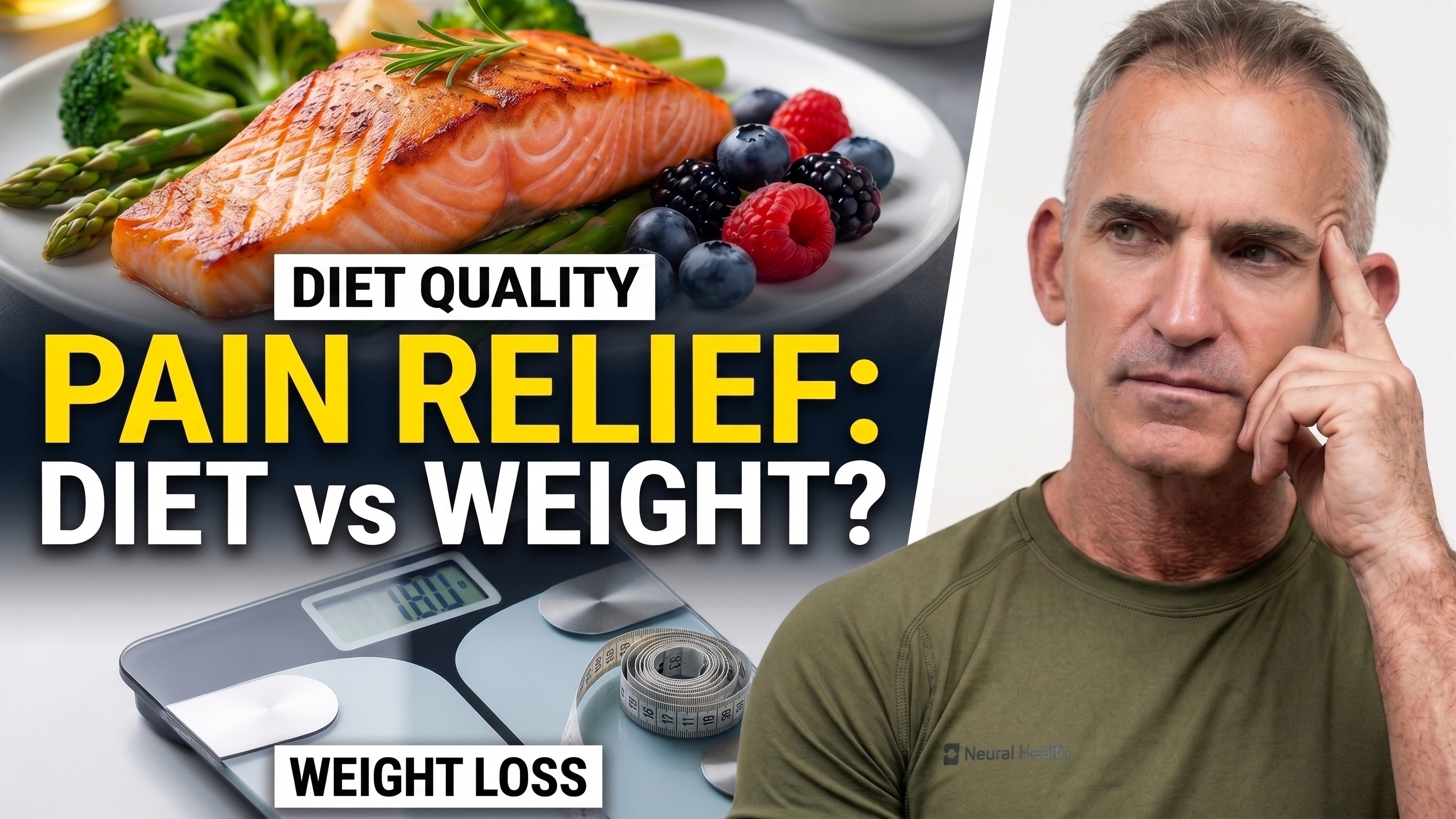
Can improving what you eat actually reduce chronic pain, even if you don’t lose weight? In this video, we break down a breakthrough study that reveals how a 22% improvement in diet quality led to a 50% reduction in chronic musculoskeletal pain in just three months.
We explore why “cleaning up” your diet—by cutting out ultra-processed “discretionary” foods and adding whole grains, fruits, and vegetables—is the single biggest factor in pain relief. Whether you’re struggling with back pain or lower limb issues, this research offers a hopeful, medication-free path to feeling better.
Key takeaways include:
Why diet quality, not just caloric restriction, drives pain reduction.
The role of “pain magnification” caused by sugar, salt, and processed foods.
Simple “centuries-old” eating templates to reset your baseline health.
For more detailed infographics and study data, visit clinicalnews.org.
Robust Timestamps
0:00 The simple truth: Healthy eating vs. Chronic pain
0:24 The 3-month breakthrough: Results you need to see
0:54 No exercise, no meds: How they cut pain by 50%
1:18 Is your food magnifying your pain?
1:58 The single biggest driver of diet quality
2:45 Deep dive: Analyzing the study findings
3:38 The link between weight loss and pain relief
4:01 Baseline pain status: From back pain to limb complaints
4:33 What are “discretionary” foods? (And why they hurt)
5:46 The return on investment for eating cleaner
6:30 Validating the science: Study quality and p-values
7:31 The “Energy Math”: Caloric restriction vs. Diet quality
8:20 Unresolved questions and the need for placebo trials
8:45 Getting back to a baseline: How our ancestors ate
9:32 Final thoughts: Why diet quality makes the biggest difference
#ChronicPain #DietQuality #NutritionScience #PainManagement #TheCatalyst
Formal Citation:
Ward SJ, Coates AM, Carter S, Baldock KL, Stanford TE, Berryman C, Stanton TR, Buckley JD, Hill AM. Exploring the role of diet quality and adiposity in the pain experience: a mediation analysis. Eur J Nutr. 2025;64:266.
Medical & Legal Disclaimer:
The information provided in this video/description is for educational and informational purposes only. It is not intended to be a substitute for professional medical advice, diagnosis, or treatment. Always seek the advice of your physician or other qualified health provider with any questions you may have regarding a medical condition. The content presented reflects a secondary analysis of a randomized dietary intervention trial and does not constitute a generic medical recommendation. Non-Monetized: We prioritize the dissemination of peer-reviewed scientific data for public service.
Great study! Thank you, Mr. Turchiano.