
Public release date: 26-Sep-2011
(CHICAGO) – Older people with low blood levels of vitamin B12 markers may be more likely to have lower brain volumes and have problems with their thinking skills, according to researchers at Rush University Medical Center.
The results of the study are published in the Sept. 27 issue of Neurology, the medical journal of the American Academy of Neurology.
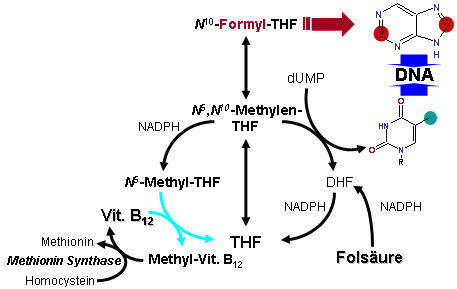
Foods that come from animals, including fish, meat, especially liver, milk, eggs and poultry are usual sources of vitamin B12.
The study involved 121 older residents of the South side of Chicago who are a part of the Chicago Health and Aging Project (CHAP), which is a large, ongoing prospective Rush a biracial cohort of 10,000 subjects over the age of 65.
The 121 participants had blood drawn to measure levels of vitamin B12 and B12-related markers that can indicate a B12 deficiency. The same subjects took tests measuring their memory and other cognitive skills.
An average of four-and-a-half years later, MRI scans of the participants’ brains were taken to measure total brain volume and look for other signs of brain damage.
Having high levels of four of five markers for vitamin B12 deficiency was associated with having lower scores on the cognitive tests and smaller total brain volume.
“Our findings definitely deserve further examination,” said Christine C. Tangney, PhD, associate professor in the department of clinical nutrition at Rush University Medical Center, and lead author of the study. “It’s too early to say whether increasing vitamin B12 levels in older people through diet or supplements could prevent these problems, but it is an interesting question to explore. Findings from a British trial with B vitamin supplementation are also supportive of these outcomes.”
On the cognitive tests, the scores ranged from -2.18 to 1.42, with an average of 0.23. For each increase of one micromole per liter of homocysteine—one of the markers of B12 deficiency—the cognitive scores decreasedby 0.03 standardized units or points.
Tangney noted that the level of vitamin B12 itself in the blood was not associated with cognitive problems or loss in brain volume. She said that low vitamin B12 can be difficult to detect in older people when looking only at blood levels of the vitamin.
“Our findings lend support for the contention that poor vitamin B12 status is a potential risk factor for brain atrophy and may contribute to cognitive impairment,” said Tangney.
Public release date: 26-Sep-2011
Increased risk of bleeding with combined use of SSRIs and antiplatelet therapy after heart attacks
Heart attack patients taking selective serotonin reuptake inhibitors (SSRIs) in combination with antiplatelet therapy — acetylsalicylic acid (ASA), clopidogrel or both (dual antiplatelet therapy) — are at higher risk of bleeding than patients taking ASA alone, according to a study in CMAJ (Canadian Medical Association Journal) (pre-embargo link only) http://www.cmaj.ca/site/embargo/cmaj100912.pdf.
Antiplatelet therapy is commonly prescribed for patients who have had heart attacks to reduce the likelihood of another attack. There is, however, a risk of bleeding, which increases when certain other medications such as anticoagulants or SSRIs are taken at the same time as antiplatelet therapy.
SSRIs are commonly prescribed for depression. Many patients have symptoms of depression after a heart attack.
The study in CMAJ looked at 27 058 patients aged 50 years or older between 1997 and 2007. More than half were taking ASA alone and about 3% were taking SSRIs along with antiplatelet therapy. Researchers found that although ASA and clopidogrel taken on their own have a similar risk of bleeding, combining an SSRI with ASA increased the risk by 42%, and combining SSRI use with dual antiplatelet therapy increased the risk by 57%. Women appeared to have a decreased risk of bleeding, as did patients who had angioplasty as an intervention after their heart attack.
Bleeding includes gastrointestinal bleeding, hemorrhagic stroke or other bleeding that required hospitalization or occurred in hospital during treatment.
“Ultimately, clinicians must weigh the benefits of SSRI therapy against the risk of bleeding in patients with major depression following acute myocardial infarction,” write the authors. They conclude physicians must be cautious when prescribing antidepressants.
