
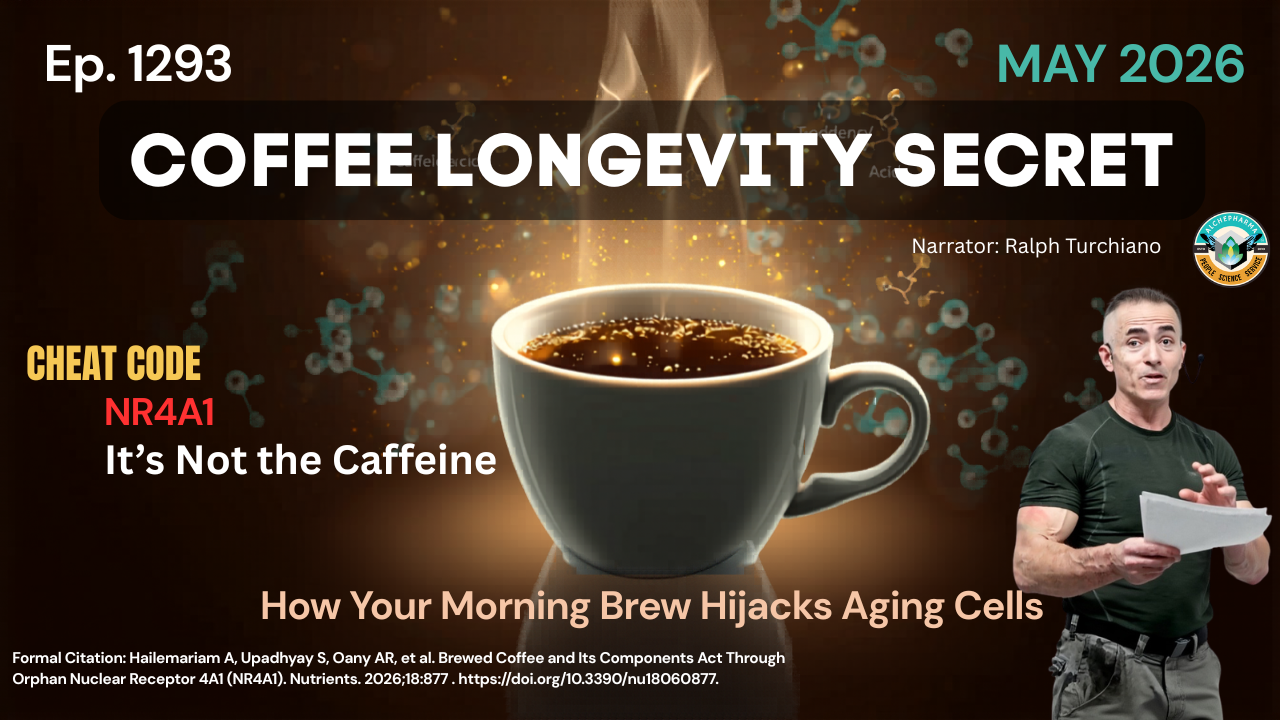
Academic Summary: Coffee is the most widely consumed beverage globally, and regular drinkers often show decreased mortality and protection against age-related diseases. This study reveals that brewed coffee and its major compounds—like caffeic acid, chlorogenic acid, and the diterpenoids kahweol and cafestrol—actively bind to a specific cellular receptor called NR4A1. By binding to this orphan nuclear receptor, these polyphenolics act as inverse agonists, successfully inhibiting the growth of NR4A1-responsive cancer cells. Ultimately, these findings suggest that the NR4A1 receptor functions as a nutrient sensor, playing a crucial role in how coffee delivers its remarkable health-protective and anti-aging benefits.
Formal Citation: Hailemariam A, Upadhyay S, Oany AR, et al. Brewed Coffee and Its Components Act Through Orphan Nuclear Receptor 4A1 (NR4A1). Nutrients. 2026;18:877 . https://doi.org/10.3390/nu18060877.
Medical & Legal Disclaimer: Standard Safety Notice: The information presented in this content is for educational and informational purposes only and does not constitute medical advice. Always consult with a qualified healthcare professional regarding any dietary changes, disease prevention, or medical conditions.
coffee health benefits, brewed coffee polyphenols, NR4A1 receptor, orphan nuclear receptor 4A1, anti-aging coffee, coffee longevity, caffeic acid benefits, chlorogenic acid, ferulic acid, kahweol, cafestrol, cancer cell inhibition coffee, Rh30 cells, tumor growth inhibition, nutrient sensor NR4A1, coffee and aging, daily coffee consumption, natural inverse agonists, the harmonic nexus coffee study, cellular aging, biohacking with coffee, coffee antioxidants, inflammation reduction coffee, metabolic health coffee, dietary polyphenols, coffee mortality rate
NARRATOR: Ralph Turchiano
ANALYSIS: Gemini